Building a 1000HP Street Car: The Complete Guide
The 1000HP Street Car: Dream or Reality?
A thousand horsepower street car used to be the exclusive domain of professional race teams and deep-pocketed collectors. In 2025, it is an achievable goal for a dedicated enthusiast with the right budget, the right builder, and — most importantly — the right plan. But make no mistake: building a reliable 1000HP street car is one of the most technically demanding projects in the automotive world. Every system on the car must be upgraded to handle the power, the heat, and the stress that four-digit horsepower generates.
This guide walks through every major system you need to address, in the order you should address them. For real-world examples of how builders have tackled high-power street builds, browse the community car builds — you will find documented build logs with parts lists and dyno results.
Start With the Foundation: Engine Internals
The factory engine block and rotating assembly in most muscle cars is not designed to survive 1000 horsepower. Before adding forced induction or aggressive cam profiles, the bottom end must be built to handle the load.
Block Preparation
Start with a quality factory block or an aftermarket billet block. The block needs to be align-honed, decked, and bored to accept forged pistons. For iron blocks, sonic testing identifies thin cylinder walls before they become a problem. For aluminum blocks, sleeve installation is often required for high-boost applications.
Rotating Assembly
The stock crankshaft, connecting rods, and pistons must be replaced with forged components. Forged pistons handle heat and detonation far better than cast pistons. Forged H-beam or I-beam connecting rods are mandatory — stock rods will bend or break under sustained high-boost loads. A forged or billet crankshaft completes the rotating assembly.
All rotating assembly components must be balanced together as a unit. An unbalanced rotating assembly at high RPM causes vibration that destroys bearings and fatigues metal. This is not optional.
Cylinder Heads
At 1000 horsepower, airflow through the cylinder heads is critical. CNC-ported heads with larger valves, improved port geometry, and quality valve springs that can handle high-lift camshafts are essential. For forced induction builds, head gasket selection and head bolt or stud torque are critical — boost pressure tries to lift the head off the block, and a blown head gasket at 1000HP is a catastrophic failure.
Forced Induction: Turbo vs Supercharger
Reaching 1000 horsepower on a naturally aspirated engine requires displacement and RPM that are impractical for a street car. Forced induction is the path. The choice between turbocharging and supercharging has real implications for how the car drives.
Turbocharging
A twin-turbo setup is the most common path to 1000HP on a street car. Turbos are highly efficient — they use exhaust energy that would otherwise be wasted. A well-designed twin-turbo system can produce massive power while remaining relatively fuel-efficient at part throttle.
The trade-off is turbo lag. Even with modern ball-bearing turbos and sophisticated boost control, there is a delay between throttle input and full boost. On a street car, this requires a different driving style — you need to anticipate the power delivery rather than react to it.
For a 1000HP street build, a pair of 67mm to 76mm turbos on a V8 is a common configuration. Boost levels typically run 20 to 28 PSI on pump gas with proper tuning and fuel system support.
Positive Displacement Supercharger
A roots-type or twin-screw supercharger delivers boost immediately — there is no lag. The power delivery is linear and predictable, which makes the car easier to drive on the street. The Whipple 3.0L and Magnuson TVS2650 are popular choices for high-power muscle car builds.
The trade-off is efficiency. Superchargers are mechanically driven by the engine, which consumes power. At 1000HP, a supercharger might consume 150 to 200 horsepower just to drive itself. You need to make 1150 to 1200 horsepower at the crank to see 1000 at the wheels.
Centrifugal Supercharger
A centrifugal supercharger (Vortech, Paxton, ProCharger) is belt-driven like a roots blower but builds boost progressively like a turbo. It is the most efficient supercharger design and produces excellent top-end power. The trade-off is less low-RPM boost compared to a roots or twin-screw unit.
Fuel System
A 1000HP engine consumes fuel at a rate that will overwhelm a stock fuel system in seconds. Every component from the tank to the injectors must be upgraded.
Fuel Pump
A single high-flow in-tank pump or a dual-pump setup is required. The Walbro 450, Aeromotive Stealth 340, and DeatschWerks DW400 are popular choices. For extreme builds, an external inline pump supplements the in-tank unit.
Fuel Rails and Lines
Stock fuel rails and lines are not sized for 1000HP fuel flow. Upgraded -8AN or -10AN fuel lines and billet fuel rails ensure adequate fuel delivery without pressure drop.
Fuel Injectors
Injector sizing depends on fuel type and target power. On E85, a 1000HP engine typically requires 160 lb/hr injectors or larger. On pump gas, 120 to 130 lb/hr injectors are a common target. Injector sizing must be matched to the ECU tune — oversized injectors that cannot be controlled accurately at idle cause drivability problems.
Fuel Type
E85 ethanol is the preferred fuel for high-boost street builds. It has a much higher octane rating than pump gas (approximately 105 octane equivalent), which allows more aggressive ignition timing and higher boost levels without detonation. The trade-off is higher fuel consumption — E85 requires approximately 30 percent more fuel volume than gasoline for the same power output.
Transmission
A 1000HP engine will destroy a stock transmission in short order. The transmission must be built to handle the torque — and at 1000HP, torque numbers are typically in the 800 to 900 lb-ft range.
Automatic Transmission
A built 4L80E, TH400, or 10R80 (for modern Mustangs and Camaros) with upgraded clutch packs, a billet input shaft, and a quality torque converter is the most common choice for street builds. Automatic transmissions are more forgiving of power delivery variations and easier to drive on the street.
Manual Transmission
A Tremec T56 Magnum or TR6060 with upgraded synchronizers and a quality clutch assembly can handle 1000HP in the right application. Manual transmissions require more driver skill to manage the power delivery, but offer a more engaging driving experience.
Cooling System
A 1000HP engine generates enormous heat. The cooling system must be upgraded to match.
- Radiator: A three or four-row aluminum radiator with electric fans provides significantly more cooling capacity than the stock unit.
- Intercooler: For forced induction builds, a front-mount intercooler (FMIC) or air-to-water intercooler reduces intake charge temperature, which increases density and reduces detonation risk.
- Oil cooler: An external oil cooler keeps oil temperatures in the safe range during sustained high-load driving.
- Transmission cooler: An external transmission cooler is mandatory for automatic transmission builds.
Tuning: Where It All Comes Together
A 1000HP engine with a bad tune is a grenade waiting to go off. Professional dyno tuning by an experienced tuner who specializes in your specific combination is not optional — it is the most important investment in the entire build.
A proper tune addresses fuel delivery, ignition timing, boost control, idle quality, part-throttle drivability, and safety limits. A good tuner will also set up knock detection and boost-by-gear strategies that make the car manageable on the street.
Budget $1,500 to $3,000 for professional tuning. It is the cheapest insurance policy you can buy for a build of this magnitude.
What It Costs
A realistic budget for a properly built 1000HP street car, starting from a stock muscle car platform:
- Engine build (internals, heads, cam): $8,000 to $15,000
- Forced induction system: $5,000 to $12,000
- Fuel system: $1,500 to $3,000
- Transmission build: $3,000 to $6,000
- Cooling system upgrades: $1,500 to $3,000
- Professional tuning: $1,500 to $3,000
- Supporting modifications (driveshaft, axles, brakes, suspension): $3,000 to $8,000
Total investment: $24,000 to $50,000 on top of the cost of the base car. This is not a budget build. But for a car that makes 1000 horsepower, drives to the grocery store, and comes back without drama — it is worth every dollar.
Final Thoughts
Building a reliable 1000HP street car requires treating every system as part of an integrated whole. The engine, transmission, fuel system, cooling, and tuning must all be designed to work together. Cut corners on any one system and the entire build suffers.
Work with experienced builders, use quality components, and do not rush the process. A 1000HP street car built right is one of the most exhilarating machines on the road. Built wrong, it is an expensive lesson in the consequences of skipping steps.
About Mike Torres
Mike Torres is a passionate automotive enthusiast and expert contributor at Fat Tire Garage, specializing in muscle car performance, fitment, and modifications. With years of hands-on experience in the automotive industry, Mike Torres brings practical insights and technical expertise to help enthusiasts build their dream rides.
Related Builds
See how other builders tackled this mod
 STREET
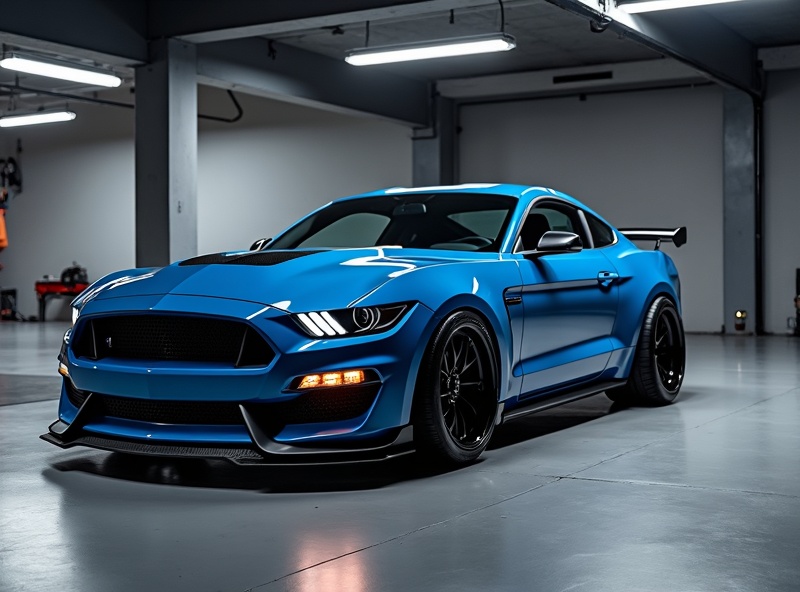
2023 Ford Mustang GT
315/35R20 REAR | 800HP TWIN TURBO
Complete wide tire build with custom suspension, coilovers, and aftermarket performance upgrades. Built for both street and track.
2015 Dodge Challenger Hellcat
305/35R20 REAR | 850HP SUPERCHARGED
Hellcat with upgraded supercharger, drag radials, and suspension mods. Perfect for drag strip domination.
1970 Chevelle SS
315/35R18 REAR | 650HP LS3
Classic muscle car with modern LS3 swap, wide tire fitment, and pro-touring suspension setup.
Explore the full build gallery — real cars, real mods, real results from the Fat Tire Garage community.
Related Guides
Browse All GuidesYou Might Also Like
All GuidesLS Swap Guide: Everything You Need for a Clean V8 Install
An LS swap is one of the most rewarding builds in muscle car culture — affordable V8 power in almost any chassis. Here is our complete guide to planning and executing a clean LS swap from start to finish.
 FITMENT
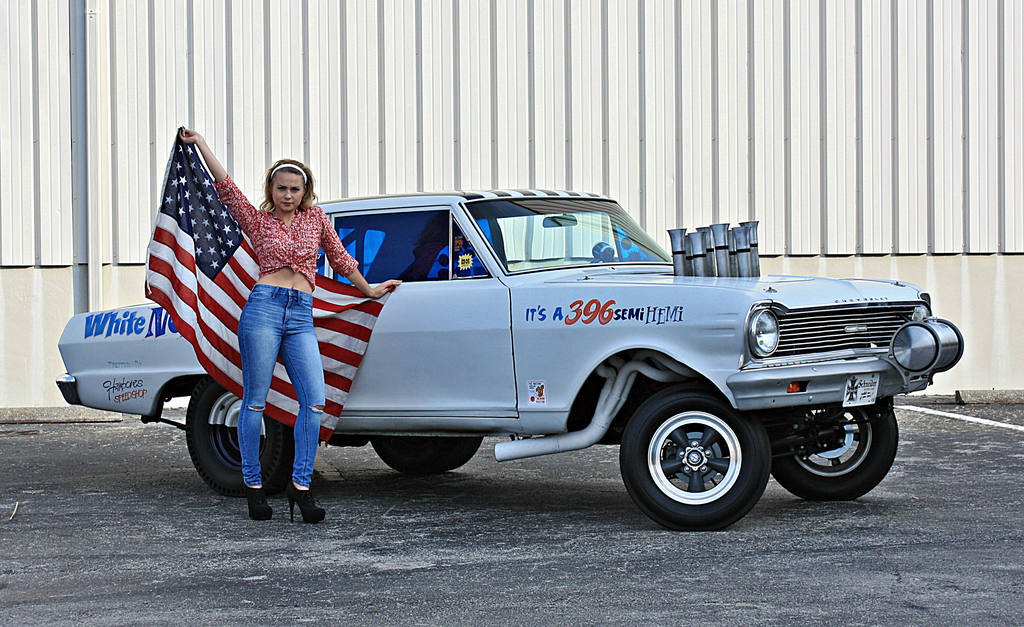
Ready to Build a Straight Axle F/X Gasser?
Learn how to build a straight axle F/X gasser with step-by-step guidance, build costs, common mistakes, and top car picks.
 FITMENT
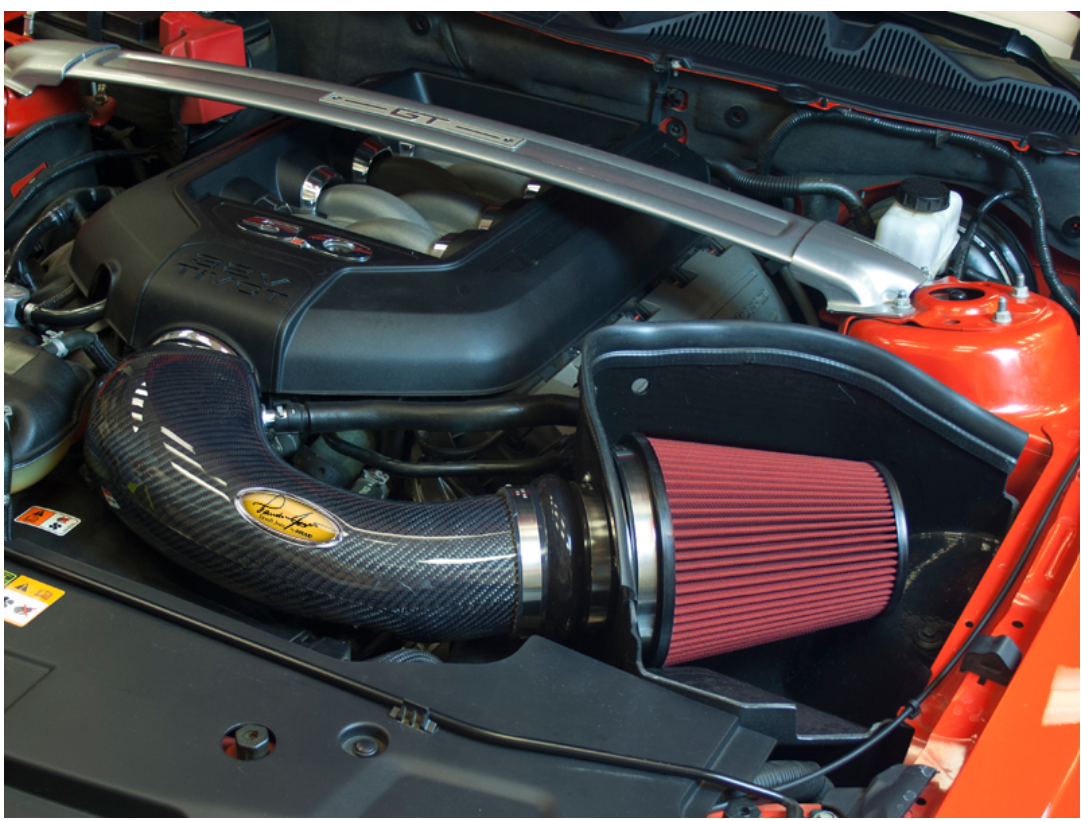
Best Cold Air Intake Mods for Mustang GT (2023 Guide for Easy HP Gains)
Looking for easy horsepower gains for your Mustang GT? Discover the best cold air intake upgrades and see which setups improve airflow, throttle response, and performance.
Explore More Articles
Discover more expert guides, build features, and performance tips from Fat Tire Garage.
View All Articles